
How to Make a Video Go Viral YouTube: A Practical Guide
Want to make a video go viral on YouTube? It's not about luck. It's about engineering a video that grabs attention, holds it, and gives the algorithm exactly what it wants to see.
The formula is surprisingly simple: a killer three-second hook, editing that keeps people glued to the screen, and a flood of engagement signals like shares, comments, and likes.
The Real Blueprint for Going Viral on YouTube Today
The idea of "going viral" has changed. Forget the old days of needing a million-view, long-form video to make a splash. Today, virality is more accessible than ever, and that's almost entirely thanks to YouTube Shorts.
Since Shorts launched, they’ve become a rocket ship for channel growth, now pulling in tens of billions of views every single day. One well-made Short can literally bring in thousands of new subscribers overnight.
But getting that kind of explosive growth isn't about throwing spaghetti at the wall and hoping something sticks. You need a repeatable system. It helps to look at broader, powerful viral marketing strategies to understand that the best content is engineered to be shared from the very beginning.
Deconstructing the Virality Engine
The YouTube algorithm is a simple beast at its core: it wants to find videos that viewers love and show them to more people. It measures this satisfaction through three main signals: the hook, retention, and engagement.
Nail these three, and you create a powerful feedback loop that tells YouTube your video is a winner and deserves a massive audience.
This flow chart breaks it down visually:
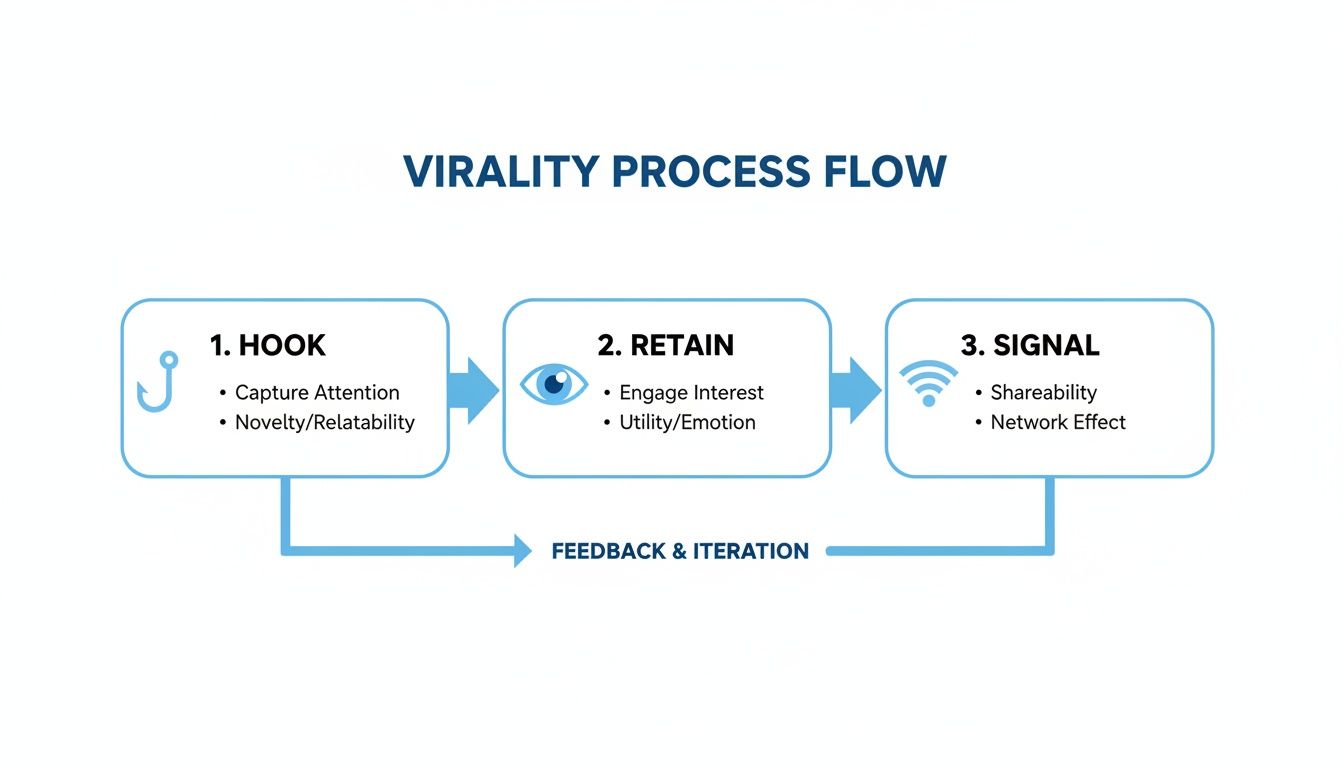
As you can see, a strong hook gets people in the door. High retention proves your content is worth their time. And all those positive signals—likes, comments, shares—tell the algorithm to push your video out even further.
The takeaway? Your job is to make the algorithm’s job easy. Give it a video with an irresistible start and a compelling middle, and it will reward you with reach.
This system is the foundation behind every viral hit. Before we dive into the nitty-gritty of executing each step, here's a quick summary of the core components.
The Core Components of a Viral YouTube Video
| Element | Objective | Best Practice |
|---|---|---|
| The Hook | Stop the scroll and grab attention in the first 3 seconds. | Start with a bold claim, a question, or a visually jarring scene. |
| Viewer Retention | Keep viewers watching for as long as possible. | Use fast-paced edits, pattern interrupts, and concise storytelling. |
| Engagement Signals | Encourage viewers to interact with the video. | Ask a direct question, use a clear call-to-action (CTA), or create controversy. |
Understanding these components is the first step. For a deeper look, check out our guide on what makes a viral video. The rest of this guide will break down exactly how to turn this blueprint into your personal playbook for virality.
Crafting Irresistible Hooks and Maximizing Viewer Retention
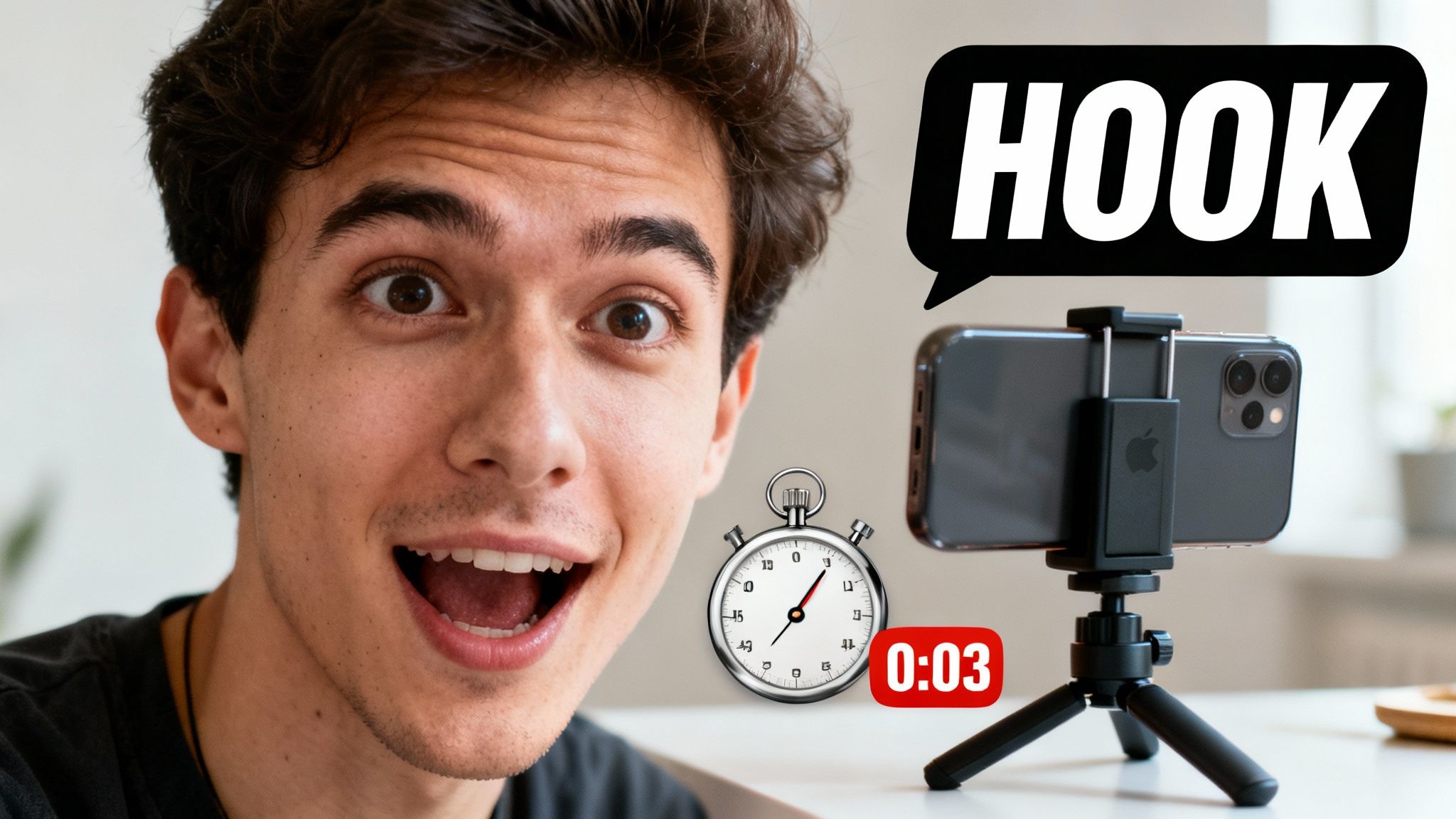
The battle for a viral video is won or lost in the first three seconds. That's it. That’s your entire window to stop someone from swiping away. If you don't grab their attention instantly, the rest of your video might as well not exist.
Your mission is to craft a hook so compelling it physically stops their thumb mid-scroll. This isn't just about a flashy intro; it's about creating an immediate psychological trigger. You can do this by opening up an information gap ("You've been doing this wrong your whole life..."), hitting them with a shocking statement, or showing the unbelievable final result right at the start. You want the viewer to think, "Okay, I have to see how this plays out."
The Psychology of a Powerful Hook
A great hook is a pattern interrupt. It yanks the viewer out of their passive scrolling zombie-mode and forces them to pay attention. There are a few tried-and-true formulas that work wonders across almost any niche.
Here are a few hook formulas that just plain work:
- The Problem/Solution Hook: Start with a pain point everyone in your audience feels. "You're still editing videos the slow way..." and then immediately flash to a clip of a much faster, better method.
- The Unexpected Outcome Hook: Show the crazy result first. Imagine a science experiment video that opens with a massive (but safe!) explosion, then cuts back to, "This is what happens when you mix these two things."
- The Direct Question Hook: Ask something that makes them curious. "Did you know 80% of people make this exact same mistake every single morning?"
Getting good at this is the first step. But remember, a great hook just gets them in the door. Retention is what keeps them there. To dive deeper, you need to understand the secrets behind hooks that make your videos go viral. A solid script is the backbone of great retention, which is why you should also learn how to write an effective YouTube script to keep your audience glued to the screen.
Editing for Relentless Viewer Retention
So you've hooked them. Now what? Your next job is to keep them watching, and that's where retention-first editing comes in. The YouTube algorithm is obsessed with high retention—it's the clearest signal that people are actually enjoying your content.
The data doesn't lie. Watch time and audience retention are still the most powerful metrics that tell YouTube to push your video out to more people. Viral Shorts (the ones hitting over 1M views) consistently have average retention rates between 70–76%. This means most people are watching almost the entire thing.
A great hook earns you three seconds. Great editing earns you the entire video. Don't let a strong start go to waste with a boring middle.
To hit these numbers, your editing needs to be relentlessly dynamic. Every single cut, sound effect, and graphic must have a purpose: to maintain momentum. Long, static shots are the absolute enemy of retention on Shorts.
Practical Techniques to Boost Retention
You can dramatically increase how long people watch by peppering your video with "pattern interrupts." These are tiny changes that reset a viewer's attention span every few seconds, preventing them from getting bored and swiping away.
Here are some dead-simple editing tactics you can use right now:
- Dynamic Captions: Forget basic subtitles. Use animated captions that pop up word-by-word. Highlight important words with different colors, fonts, or even emojis. This keeps the viewer's eyes locked on the screen.
- Purposeful Sound Design: Sound is easily 50% of the experience. Layer in subtle whoosh, pop, and click sound effects to match visual changes. It makes the video feel more polished and satisfying to watch.
- Rapid Jump Cuts and Zooms: If you're on camera, cut out every single breath and pause. Use quick jump cuts. Apply a slow, subtle zoom-in or zoom-out over a clip to create a sense of movement, even when nothing is happening.
- Strategic B-Roll and Overlays: As a rule of thumb, never let one shot stay on screen for more than three or four seconds. Cut away to relevant B-roll, pop-up images, or simple emoji overlays that illustrate what you're saying.
When you combine a killer hook with these retention-focused editing tricks, you create an experience that feels energetic and valuable. That's the one-two punch that signals to the YouTube algorithm that your video is the real deal.
Designing Thumbnails and Titles That Demand Clicks
Let's be brutally honest: your video’s amazing hook and killer retention editing mean absolutely nothing if nobody clicks play. Your thumbnail and title are the gatekeepers to your content. If they fail, everything else you’ve poured hours into fails right along with them.
In a sea of endless scrolling, they are your video's one-second sales pitch. The goal isn't just to describe your video; it's to create an irresistible combo of visual intrigue and written curiosity that stops a viewer dead in their tracks and makes them need to know more.
The Art of the High-Contrast Thumbnail
First rule: your thumbnail is not a random frame grab from your video. It's a meticulously designed advertisement. The best ones scream an idea or an emotion in less than a second, even on a tiny phone screen.
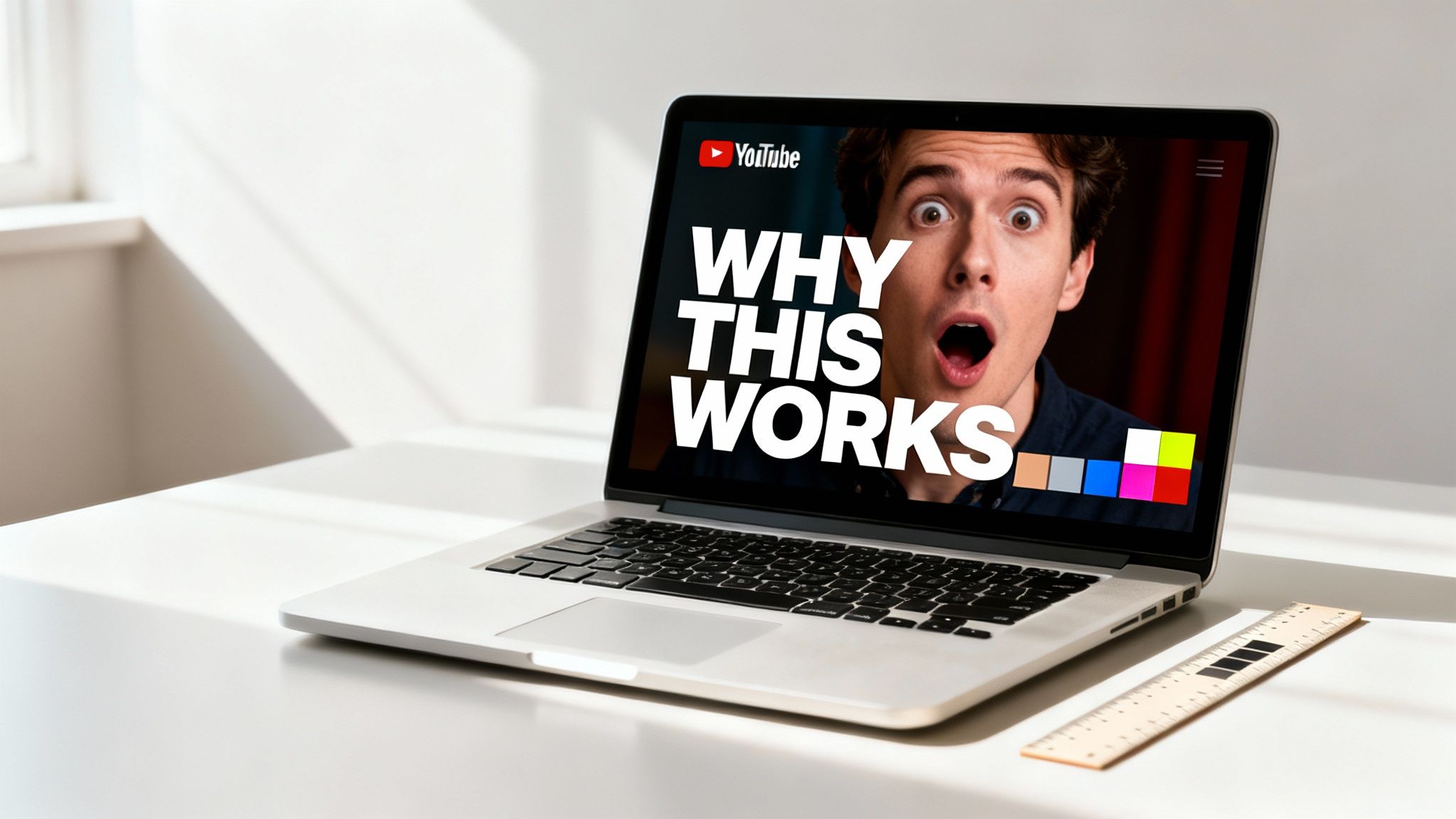
Simplicity is your best friend here. A cluttered thumbnail is an ignored thumbnail. Focus on one main subject and use high-contrast colors to make it pop. Think bright yellows, reds, and greens against dark backgrounds—they’re classics for a reason. They work.
Here’s what I’ve seen work time and time again:
- Human Faces: Our brains are hardwired to notice faces. A thumbnail showing a strong, clear emotion—like shock, joy, or confusion—is incredibly powerful. It builds an instant connection.
- Minimal Text: If you add text, keep it to three or four words, tops. The words should add context or spark curiosity, like "It Actually Worked?!" or "My Biggest Mistake."
- Bold Outlines and Saturation: Don't be afraid to dial up the saturation and add a subtle outline to your main subject. This little trick helps it jump off the screen and separate itself from YouTube’s busy interface.
Crafting Titles for Humans and Algorithms
Writing a great title is a balancing act. You need keywords so the YouTube algorithm knows what your video is about, but you also have to spark curiosity in a real person. A title stuffed with keywords but zero emotion is a recipe for being ignored.
The best titles create an "information gap." They hint at a cool story or a surprising result without giving it all away. Compare "How I Built a Wooden Table" with "I Built This Table With a $20 Tool." See the difference? The second one makes you wonder, "What tool? How?"
Think about where you are in your channel's journey. For a new channel, it's smart to be more descriptive and search-friendly (e.g., "The Easiest Way to Edit Viral Shorts in 5 Minutes"). Once you have a loyal audience that trusts you, you can lean more into pure curiosity-driven titles.
Pro Tip: Read your title out loud. Does it sound like something a real person would say or be interested in? If it sounds clunky or robotic, it’s time for a rewrite.
Why A/B Testing Is Non-Negotiable
Never, ever assume you know which thumbnail or title will perform best. I've been shocked countless times. The top creators are constantly testing different versions to squeeze every last click out of their content. This process, A/B testing, is one of the most powerful growth hacks you have.
Even a tiny lift in your click-through rate (CTR) can have a massive impact. Hard data shows that custom, high-CTR thumbnails can boost views from YouTube's browse and suggested features by up to 154%. Systematically testing small changes—a different facial expression, new text, a color swap—can raise your CTR by a few percentage points. That tiny push is often all a video needs to get picked up and promoted by the algorithm. You can read more about how A/B testing can boost your CTR on vidiq.com.
Tools like TubeBuddy let you run two thumbnails against each other to see which one your audience clicks more. After a day or two, you'll have a clear winner. Switching to that design maximizes your video’s reach. This data-driven approach removes the guesswork, and it's absolutely essential if you’re serious about making a video go viral on YouTube.
Using Trends and Distribution to Maximize Your Reach
A perfectly crafted video with a killer hook and flawless editing is a powerful thing, but honestly, it’s only half the battle. To really go viral, your content needs fuel. That fuel comes from smart distribution and tapping into the conversations already buzzing online. This is how you get your video in front of enough people to trigger that beautiful algorithmic snowball.
You can't just create in a vacuum and hope for the best. You need to become an expert trend-spotter in your own niche. This doesn't mean you have to do every new dance challenge. It's about finding trending audio, formats, and topics that you can spin to fit your unique voice. A funny audio track about procrastination can be just as effective for a finance channel as it is for a comedy creator—if you get creative with it.
Identifying and Capitalizing on Trends
The key here is to act fast, but not carelessly. Trends on platforms like TikTok and YouTube Shorts have a notoriously short shelf life. What’s blowing up today might be old news by next week. Your goal is to catch the wave as it’s rising, not after it’s already crashed on the shore.
To pull this off, you need a system for spotting what's coming next.
- Become an Active Consumer: Spend a dedicated 15-20 minutes each day just scrolling the "For You" pages and Shorts feeds. Don't just watch—analyze. What sounds keep popping up? What editing styles are you seeing everywhere?
- Monitor Niche Leaders: Find the top creators in your space and keep an eye on what they’re doing. They often have a feel for what’s about to pop. When you see a few of them jump on a new format, that’s a pretty strong signal.
- Use Platform Tools: Both TikTok and YouTube have dedicated "trending" sections for audio and hashtags. Make it a habit to check these to see what the platforms themselves are pushing.
Once you spot a trend, the real challenge is making it your own. Don's just copy; innovate. Ask yourself, "How can I apply this trending sound to a problem my audience faces?" or "How can I use this popular editing style to tell a story about my industry?" That authentic adaptation is what separates a true creator from a copycat.
Building a Multi-Platform Distribution Flywheel
Thinking your video’s job is done once you hit "publish" on YouTube is a massive mistake. To really blow up, you need to treat platforms like TikTok and Instagram Reels not as competitors, but as powerful distribution channels. This creates a flywheel effect where each platform feeds the others.
The logic is simple: you post your Short on YouTube, then you cross-post that same video (watermark removed, of course) to TikTok and Reels. This move alone instantly triples your potential for initial discovery. Viewers who find you on TikTok might then search for your longer-form content on YouTube, bringing fresh subscribers right into your ecosystem.
This cross-platform approach isn't just a hunch; it's a data-backed strategy for explosive growth. The initial velocity of a video is a critical signal to the YouTube algorithm.
Studies on content strategy have shown a direct link between cross-posting and viral potential. In fact, research shows that creators who consistently repurpose their YouTube Shorts for TikTok and Instagram Reels see an average 40% increase in initial views within the first 24 hours on their original YouTube video. Why? Because that external traffic sends powerful, early engagement signals that tell YouTube your video is worth showing to more people. You can discover more insights about video marketing statistics on influencermarketinghub.com.
Sparking Crucial Initial Engagement
That first hour after you post a video is the most critical window you have. The engagement your video gets during this "golden hour" heavily influences where it goes from there. Your job is to generate as much activity as possible, as fast as possible.
Here's a simple checklist to run through every time you publish:
- Pin a Provocative Comment: Right after posting, drop a comment yourself that asks an open-ended question about the video. Pin it. It'll be the first thing viewers see and it practically begs for a response.
- Share to Other Socials: Blast a link or a teaser of your new video to your Instagram Stories, Twitter, and anywhere else you have an audience. Create a little urgency.
- Engage with Early Comments: For that first hour, be on call. Respond to every single comment you get. This not only encourages more comments but also shows the algorithm that your video is fostering a real conversation.
By mixing smart trend-spotting with a solid multi-platform distribution strategy and a plan to spark instant engagement, you create the perfect storm for virality. You’re not just making a great video; you’re giving it the launchpad it deserves to reach millions.
How to Scale Your Content Production with AI
So, what’s the real secret to going viral? It’s not a one-hit wonder. It's consistency. The YouTube algorithm loves channels that post often, but trying to crank out high-quality videos every single day is a one-way ticket to burnout.
This is where AI becomes your secret weapon. It’s the key to multiplying your output without burning the candle at both ends.
The whole strategy hinges on faceless videos. This format is a game-changer because it removes the biggest bottlenecks: no on-camera talent, no fancy equipment, and no time-sucking video shoots. All you need is a great script, a solid voiceover, and eye-catching visuals—and AI can fast-track all of it.
Crush Your Bottlenecks with Automation
Let's be real, the old way of making videos is a grind. You brainstorm, write a script, record the audio, hunt for B-roll, and then spend hours stitching it all together. Every step is a chance to get stuck.
AI tools are designed to smash through these roadblocks. Instead of staring at a blank page for an hour, you can feed an AI a simple prompt and get a dozen script ideas in seconds. It can then generate a human-like voiceover in minutes, saving you the hassle of recording and editing audio. From there, it can pull relevant stock footage or even generate unique visuals to bring your script to life.
The speed increase is wild. We're talking about a potential 80% boost in production speed with AI-powered tools. That means you could be making five, or even ten, times more videos than you are right now, letting you test ideas and find your viral formula way faster. Synthesia.io published some interesting findings on this.
This isn't about letting a robot take over your creativity. It’s about amplifying it. You set the direction, and the AI does the grunt work.
A Quick and Dirty Workflow with ClipShort
Tools like ClipShort are built from the ground up for this exact purpose: creating a high volume of quality content, fast. It rolls the entire faceless video process into one place, so you can go from a rough idea to a polished Short in just a few minutes.
Let's walk through a real-world example. Say you want to make a Short about "weird historical facts."
- Get a Script, Instantly: You give ClipShort a simple prompt, like "write a 30-second YouTube Short script about a weird historical fact." The AI spits out a punchy script with a solid hook.
- Generate a Voiceover: Pick a voice from the library. You can choose the language, accent, and vibe that matches your channel. One click, and your audio track is done.
- Assemble the Visuals: Here’s where it gets cool. ClipShort’s AI reads the script and automatically finds relevant stock videos and images to match what’s being said. It then sequences them for you.
- Add the Viral Polish: Now for the fun part. You add the stuff that actually keeps people watching. Slap on some animated captions, sprinkle in a few emojis, and drop in some background music to set the mood.
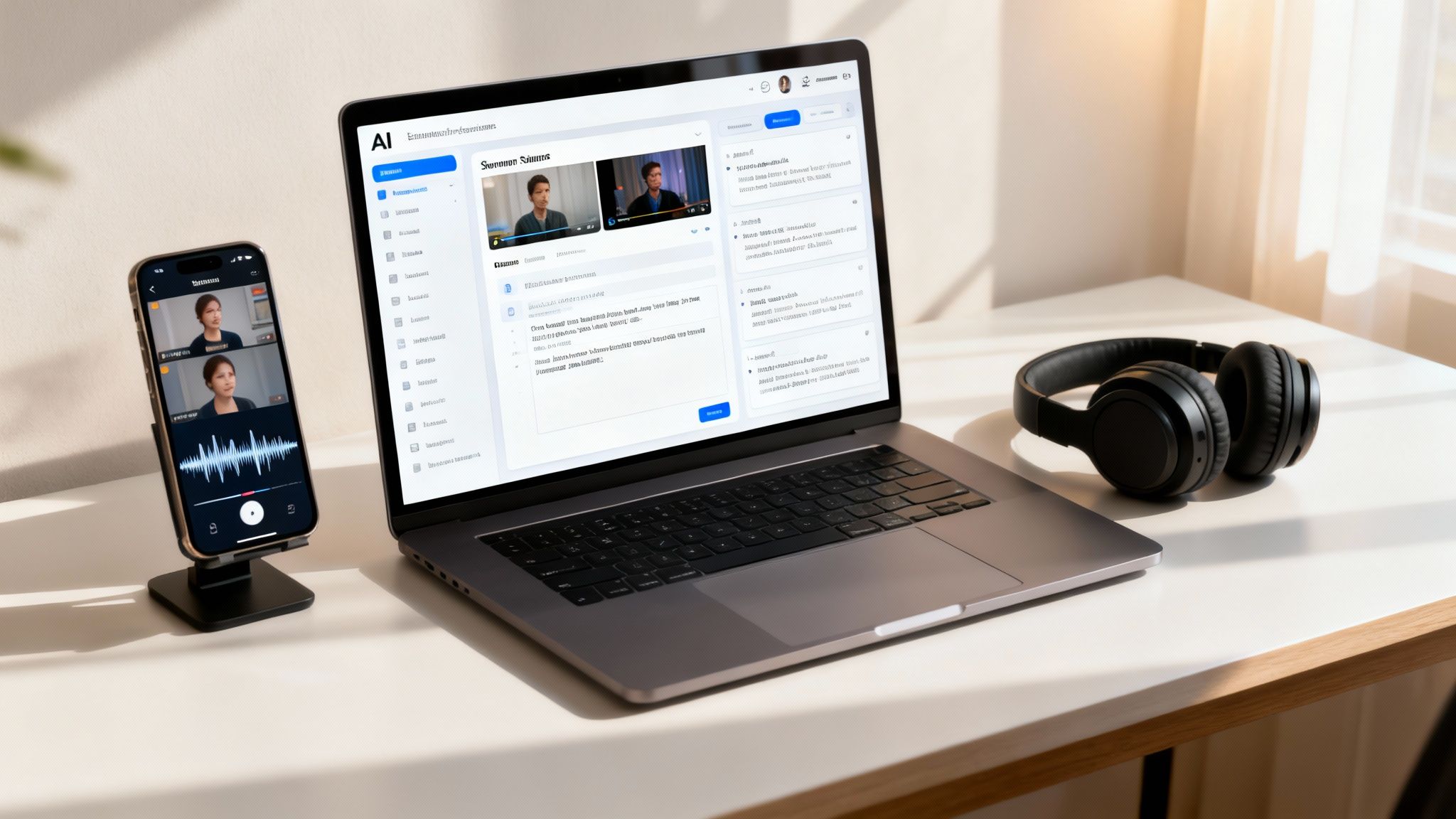
This screenshot gives you a peek at the ClipShort interface. Everything—script, visuals, audio—is right there in one clean workspace.
You're looking at a complete system built for speed. You go from script to finished video without ever having to jump between different apps.
A process that used to take hours of manual labor now takes just a few minutes. You can even spin up several versions of the same video with different hooks or visuals to A/B test what hits hardest with your audience. For a more detailed walkthrough, check out our complete guide on how to create videos with AI.
When you systematize production like this, your job changes. You stop being an editor and start being a creative director. Your focus shifts to coming up with killer ideas and watching the analytics, while the AI handles the heavy lifting. That's how you get the volume you need to chase virality.
Common Questions About Going Viral on YouTube
Even when you have a solid game plan, chasing virality can feel like trying to catch lightning in a bottle. Let’s clear the air and tackle some of the biggest questions creators have when they’re trying to crack the YouTube code.
Getting these fundamentals right is what separates the channels that fizzle out from the ones that explode. It all starts with knowing what "viral" even means in today's world.
What Is a Viral Video Anymore?
Forget the old benchmarks. A decade ago, hitting 1 million views was the gold standard. In the age of YouTube Shorts and TikTok, the goalposts have moved—a lot.
Today, a video is typically considered viral when it racks up millions of views, often in the 5 to 8 million range, in just a few days. The real key isn't the final number; it's the velocity. A truly viral video gets an insane amount of views in a short burst, pushed by the algorithm far beyond your regular audience.
Do I Need a Big Subscriber Count First?
Absolutely not. This is probably the biggest myth holding back new creators. While having a built-in audience definitely gives you a head start, the YouTube Shorts algorithm is a discovery engine at its core.
It cares more about engaging content than your channel's history. A brand-new channel with zero subscribers can genuinely go viral with one killer Short if the retention and engagement numbers are there.
A great video is your ticket to an audience; you don't need a huge audience to make a great video. If your content is good enough, the algorithm will do the heavy lifting for you.
Can I Go Viral Without Showing My Face?
Yes, and honestly, it’s one of the most scalable ways to grow on YouTube right now. "Faceless" channels are absolutely blowing up in niches like history, finance, motivation, and storytelling.
The magic of a successful faceless video comes down to three things:
- A killer script: The story or information has to be impossible to click away from.
- A captivating voiceover: Your narration needs energy, clarity, and the right emotional tone to hook the listener.
- Dynamic visuals: Think high-quality stock footage, slick animations, and fast-paced editing that keeps the eyes glued to the screen.
This strategy lets you focus on producing and testing a high volume of content, which massively boosts your chances of hitting the viral jackpot.
How Often Should I Post to Go Viral?
While there's no magic number, when you're just starting, volume is your best friend. Consistency matters most, but posting frequently—ideally once a day for Shorts—gives you more data and more shots on goal.
Think of each video as an experiment. You’re testing hooks, topics, editing styles, and sounds. Once you find a formula that gets a reaction, you can lean into it hard. It’s a numbers game, and posting daily stacks the odds in your favor.
Ready to stop guessing and start scaling? ClipShort automates the entire faceless video creation process, from script to final edit, so you can produce viral-quality Shorts in minutes, not hours. Start creating for free today!