
How to Create Short Videos That Go Viral
The old way of making short videos is a grind. The endless cycle of filming, editing, and putting yourself on camera is enough to burn anyone out. But what if there was a better way?
The secret isn't working harder—it's working smarter. Modern short video creation boils down to four core elements:
- Crafting a hook-driven story
- Using AI for visuals and voiceovers
- Adding retention-focused captions and sound
- Formatting for platforms like TikTok or YouTube
This faceless approach ditches the need for cameras and complicated software, opening the door for anyone to produce killer content in a fraction of the time.
The New Blueprint for Viral Short Videos
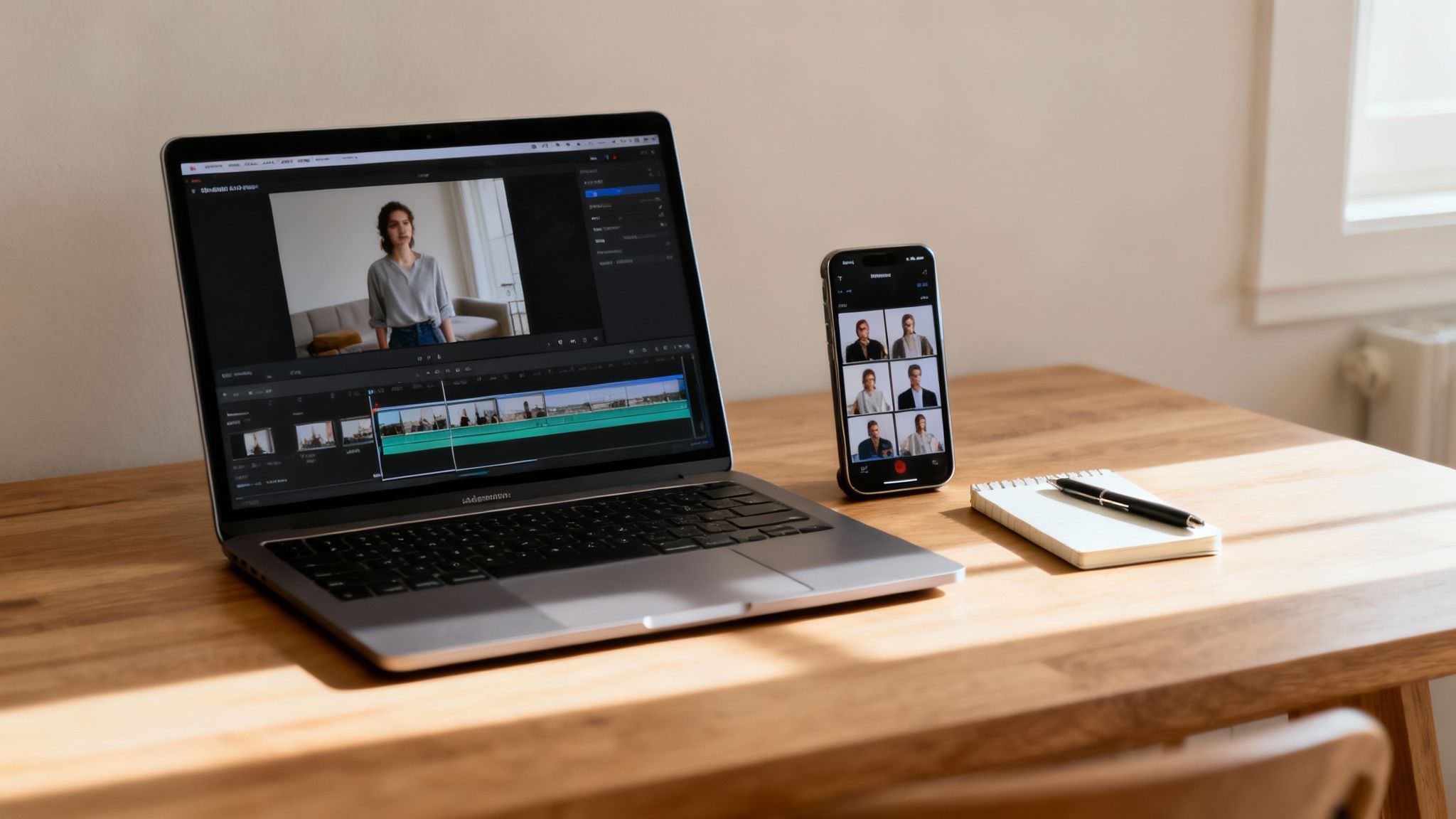
Let's be real: the demand for fresh short-form video content is relentless. For many creators and brands, it's a constant struggle to keep up. The time, resources, and on-camera confidence required to post consistently can feel like a massive barrier.
This guide is your way out of that cycle. We’re diving into a powerful method for creating compelling, faceless content with AI. It’s a total game-changer, leveling the playing field and making high-quality video production accessible to everyone, not just those with fancy gear or a huge team.
Why Faceless AI Videos Are Your Secret Weapon
The whole idea is beautifully simple. You go straight from a concept to a polished, viral-ready video without ever stepping in front of a camera. This sidesteps the biggest headaches in traditional video production.
This shift isn't just about saving time; it's about unlocking your creative freedom. When you're not worried about lighting, makeup, or how you look on camera, you can pour all your energy into what really matters: the story.
| Challenge in Traditional Video | How Faceless AI Solves It | Benefit for Your Content Strategy |
|---|---|---|
| Time-Consuming Filming | Generates scenes from text prompts or stock footage | Produce content 10x faster and post more consistently |
| Need for On-Camera Talent | Uses AI voiceovers and faceless visuals | Eliminates performance anxiety and talent costs |
| Complex Editing Software | Automates scene assembly, captions, and timing | Lowers the technical barrier, no pro skills needed |
| Inconsistent Output | Standardizes style and quality with templates | Creates a cohesive and recognizable brand aesthetic |
| High Production Costs | Requires minimal tools—just an idea and a browser | Drastically reduces budget for gear, locations, and crew |
This approach allows you to focus purely on the message and narrative—the true drivers of viral success. It's a fundamental part of any modern video content marketing strategy that aims for scale and impact.
Why This Method Is Crushing It Right Now
The beauty of this blueprint is its raw efficiency. You can test ideas faster, pump out more content, and maintain a steady presence without burning out.
It's an incredibly effective strategy, especially for:
- Storytelling Channels: Weaving historical tales or fictional narratives without needing a single actor.
- E-commerce Brands: Churning out quick product demos or feature explainers at scale.
- Educational Content: Breaking down complex topics with clean visuals and clear narration.
In this guide, I'll walk you through every step of the process. You'll see exactly how to take a simple idea and transform it into a high-retention video that drives real engagement and growth. Let's get started.
Crafting Your Story with Scripts and AI Voiceovers
Every single viral short you see has a powerful story at its core, and the script is what makes it tick. It’s easy to assume the best videos are just spontaneous moments of genius, but the truth is, most are planned down to the second. A solid script is the secret weapon that separates a video people swipe past from one they can't stop sharing.
In the blink-and-you'll-miss-it world of short-form video, you have just a few seconds to earn a viewer's attention. That means your script needs to be tight, punchy, and built from the ground up for retention. Forget the long, rambling intros—you have to get straight to the good stuff.
The most effective scripts I've seen all follow a simple, powerful formula: the hook, the core message, and the call-to-action (CTA). This framework keeps your story sharp, engaging, and guides the viewer toward a specific goal.
The Anatomy of a High-Retention Script
Let's start with the hook. This is, without a doubt, the most important part of your script. It's the first 1-3 seconds of your video, and its only job is to stop the scroll. It has to give someone a compelling reason to stick around.
A killer hook instantly sparks curiosity, creates urgency, or makes the viewer feel seen.
Here are a few real-world examples:
- For a product demo: "Here’s a tech gadget you didn’t know you needed."
- For a history channel: "This is the real story behind a historical event you learned in school."
- For a life hack video: "Stop cleaning your kitchen this way. Do this instead."
See how each one makes a bold claim or asks a question? Once you’ve landed the hook, you deliver the value with your core message. This is the meat of your script, where you explain your concept or tell your story. Keep it focused on one single idea to avoid confusing your audience. For a more detailed look at structuring your narrative, our guide on crafting a compelling YouTube video script has some great strategies.
Finally, wrap it up with a clear call-to-action. What do you want the viewer to do next? Whether it’s “Follow for more tips,” “Click the link in bio,” or “Share this with a friend,” a direct CTA is what turns passive viewers into an engaged community.
Bringing Your Script to Life with AI Voiceovers
With your script polished and ready, it's time to turn that text into a compelling voiceover. This is where AI tools like ClipShort really come in handy, letting you generate a professional-sounding narration without ever touching a microphone.
The trick to a great AI voiceover is picking a voice that matches your brand and the video's mood. Are you going for an energetic, upbeat vibe for a product reveal, or a calm, authoritative tone for an educational deep-dive? Modern AI gives you an incredible range of voices, accents, and languages to play with.
A HubSpot study found that turning other content into video can boost engagement by a whopping 41%. A quality voiceover is what makes that video feel authentic and truly connect.
But it’s not just about the voice—it’s about the delivery. Pacing is everything. Talk too fast, and your message gets lost. Too slow, and you'll bore your audience into swiping away.
Play around with the pacing settings in your AI tool. Try adding strategic pauses after key points to let the information sink in. This tiny detail makes the narration feel much more human and natural, mimicking how we actually speak. Think of it like you're directing an actor; you're guiding the AI to hit the right rhythm and emphasis to keep your audience hooked from the first word to the very last.
Assembling Visually Stunning Scenes with AI
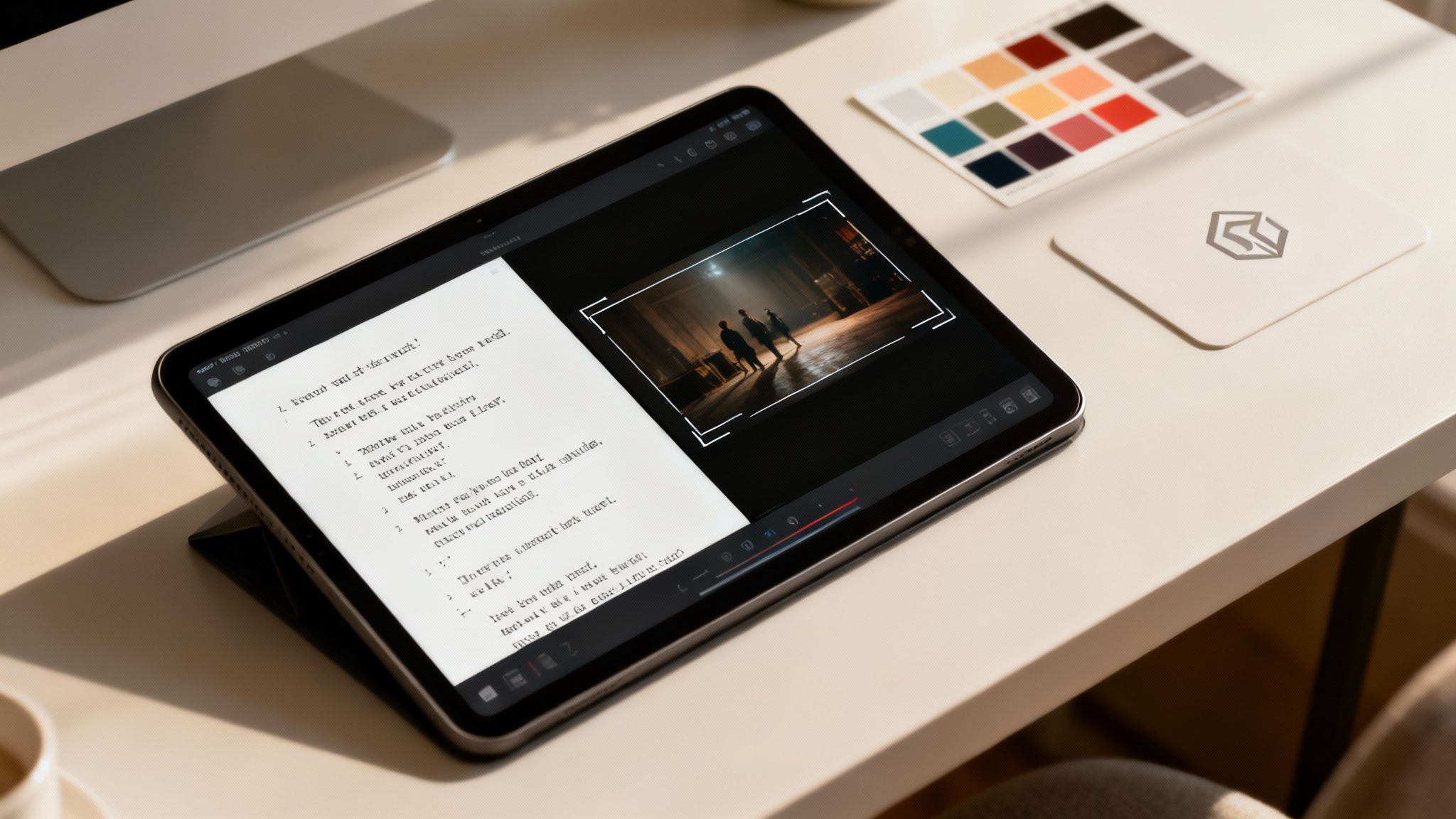
Alright, this is where the magic really happens. Your script is locked in, and now it's time to bring it to life visually—all without ever touching a camera. We're essentially turning your text prompts into a full-blown video, scene by scene.
This process completely changes the game. You stop being a filmmaker and become a creative director. Your job is to guide the AI, telling it what to create to build a visual world that perfectly complements your story.
Platforms like ClipShort are designed for this. They read each line of your script and generate a matching visual clip. This isn't just about saving time; it's a creative game-changer. You can now produce professional-grade visuals that would have once required a film crew, a huge budget, and some serious design chops.
Choosing the Right Visual Style
Your first big decision is to pick a visual style. Think of this as setting the entire mood for your video. It's the first thing your audience will notice, and it's critical for making a connection. Get this right, and you’re already halfway there.
Most good AI video tools give you a handful of styles to start with. Each one has a completely different vibe, so you need to pick the one that fits your niche and message.
Here are a few common styles you’ll run into:
- Cinematic: This one is perfect for dramatic storytelling, historical content, or anything that needs an epic feel. It uses rich colors, deep shadows, and wide shots to feel like a movie. A channel about fantasy lore would absolutely crush it with this style.
- Realistic: If you're doing tech reviews, educational content, or product demos, this is your go-to. It creates clean, crisp images that look like high-end stock footage, adding a layer of credibility and authority to your videos.
- Anime or Comic: Trying to connect with a younger audience? Or maybe your channel is all about gaming, pop culture, or creative fiction. These vibrant, stylized visuals are incredibly eye-catching and instantly familiar.
Choosing the right style makes your visuals an active part of the story, not just something happening in the background. It helps build a consistent brand, making your content instantly recognizable as people scroll through their feeds.
It's worth remembering that turning articles or scripts into video can boost engagement by as much as 41%. Nailing the visual style is a massive part of making that happen.
Imagine you run a channel that breaks down complex financial advice. A realistic style is a no-brainer. The clean, professional look reinforces that you're a trustworthy source. But if you’re telling spooky stories? A cinematic style with moody lighting is going to be way more effective at building that creepy atmosphere.
This isn't just about aesthetics; it's a strategic move. Your visual style is your brand's signature.
Refining and Customizing Your Scenes
Okay, you've picked a style. The AI has given you a solid first draft, but now it's time to add your personal touch. This is what separates the average creators from the pros.
Don't just accept the first thing the AI spits out. If a scene feels a little off or doesn't quite capture the emotion of your script, tweak it. Regenerate the clip with a more specific prompt or even swap it out with your own media.
Here are a few things I always do to polish my scenes:
- Inject Your Branding: This is non-negotiable. Upload your logo and add it as a subtle watermark in the corner. Create a branded end-screen. These small touches reinforce who you are and look incredibly professional.
- Use Custom B-Roll: Got your own product shots or graphics? Use them! If you’re an e-commerce brand, don't let the AI generate a generic coffee cup—show your coffee cup. It makes a world of difference.
- Ensure Visual Cohesion: Watch the full sequence of clips. Do the colors and lighting flow smoothly from one scene to the next? If one clip sticks out like a sore thumb, regenerate it until it fits the overall aesthetic.
This is the step that takes your video from "AI-generated" to "professionally produced." You're taking an automated creation and turning it into something that truly reflects your unique brand and vision—all without ever opening a complicated editing suite.
Using Captions and Sound to Maximize Retention
In the scroll-happy world of social media, your video is always just one swipe away from being ignored. While your visuals might get someone to stop, it's the combination of captions and sound design that truly keeps them watching. These two elements create a full sensory experience that's tough to tune out.
Let's be real: a huge chunk of your audience—some stats say up to 85% on platforms like Facebook—are watching with the sound off. This makes your captions one of the most powerful tools you have. Without them, your message is completely lost on a massive slice of your potential viewers.
Dynamic, animated captions are no longer a nice-to-have; they're a requirement. They guide the eye, punch up key phrases, and keep the story moving, even in total silence.
The Power of Animated Captions
Static, boring captions just won't cut it anymore. To really grab attention, your text needs to feel alive. This is where customizing caption templates becomes a total game-changer for anyone figuring out how to create short videos that don't just blend in.
Think of your captions as another character in your video. They can build suspense, inject a bit of humor, or create a sense of urgency.
Here’s how to make them work for you:
- Emphasize Key Words: Make the important words pop by changing their color, size, or giving them a quick animation. This is a visual cue that tells the viewer exactly what to pay attention to.
- Control the Pacing: Don’t just throw a block of text on the screen. Reveal words or short phrases in sync with the voiceover to build a rhythm and control the flow of your story.
- Inject Personality with Emojis: The right emoji can add emotional context that text alone just can't deliver. It makes your video feel more human and relatable.
Modern tools like ClipShort offer a whole library of eye-catching caption templates designed for this exact purpose. You can easily tweak fonts, colors, and animations to nail your brand's look. For a deeper dive into the how-to, exploring how to add captions to videos can give you even more practical tips.
Mastering Your Audio Landscape
While many people watch on mute, a big part of your audience does listen, especially on platforms like TikTok where sound is everything. For these viewers, your sound design is just as critical as your visuals. It’s what turns a simple clip into a genuinely immersive experience.
Your audio strategy really comes down to two things: background music and sound effects (SFX).
Pro Tip: Think of music as the emotional heartbeat of your video. A fast, upbeat track can make a product demo feel exciting, while a soft, ambient melody can add a sense of wonder to a storytelling video.
The music you pick sets the entire mood from the first second. Always choose a track that complements your message, not one that competes with it. The volume should also be low enough that the voiceover is perfectly clear and easy to follow.
Sound effects, on the other hand, are the secret weapon of high-retention videos. They're the little audio details that make your content feel polished and pro.
Think about these real-world examples:
- "Whoosh" SFX: Use this for transitions between scenes to make them feel way smoother and more dynamic.
- "Ding" or "Pop" SFX: Add these when a key piece of info or a product feature appears on screen to grab the viewer's attention.
- Typing Sounds: If you're showing a text message or someone typing in a search bar, adding keyboard clicks makes the action feel real and tangible.
These subtle audio cues might seem small, but they add a layer of polish that subconsciously signals high-quality content to the viewer. When you nail both your captions and your sound, you create a powerful video that captivates people whether their volume is on or off.
Adapting Your Videos for Each Social Platform
Making a great video is only half the job. Where and how you post it is what really separates the amateurs from the pros. Just blasting the same video file across TikTok, Instagram, and YouTube is a fast track to mediocre results.
Each platform has its own algorithm, its own audience, and its own unspoken rules. You have to treat them like the unique ecosystems they are. Think of it this way: you wouldn't wear the same outfit to a coffee meeting, a black-tie gala, and a rock concert, right? The same goes for your content. A video that explodes on TikTok could easily flop on Instagram if you don't tweak your approach.
Learning how to tailor your videos for each platform turns every post into a strategic move for growth. Let's break it down.
Mastering the Art of TikTok
TikTok is the undisputed king of trends. It's fast, raw, and ridiculously good at giving new accounts massive organic reach. The culture here rewards authenticity, not polish. Overly produced, corporate-style videos just don't land. Viewers want content that feels real and jumps on the latest sound, meme, or challenge.
When adapting your faceless videos for TikTok, here's what works:
- Move on Trends, Fast: If a sound or format is taking off, figure out how to connect it to your niche today. Speed is everything.
- Keep It Short & Punchy: While you can post longer videos, the sweet spot is often under 30 seconds. Those first three seconds are make-or-break.
- Use Native Text: The algorithm seems to give a little boost to videos that use TikTok’s own text-on-screen features. Keep it bold, clear, and easy to digest.
Polishing Your Content for Instagram Reels
Instagram Reels feels more curated. It's a bit more polished and aesthetically driven than TikTok. While trends still matter, there’s a much bigger emphasis on high-quality visuals and a clean, consistent look. It's an amazing platform for brands, e-commerce, and anyone trying to build a strong visual identity.
Instagram's integration with its shopping features also makes it a powerhouse for product-focused content. If you're looking for deeper strategies for Instagram Reels and Stories, there are plenty of great resources out there to help you nail the visual-first approach.
Key takeaways for Reels:
- Aesthetics Are Everything: Use high-resolution clips and try to maintain a consistent style or color palette. Your Reel should feel like it belongs on your main Instagram grid.
- Lean into E-Commerce: If you’re showing off a product, use product tags. Make it dead simple for people to shop right from your video.
- Write Better Captions: Unlike TikTok, the caption on Instagram carries more weight. Use it to tell a story, ask a question, and drop a strong call-to-action.
Leveraging YouTube Shorts for Long-Term Growth
YouTube Shorts is a totally different game. Yes, it’s short-form video, but its real power is acting as a massive discovery engine for your main YouTube channel. The algorithm is built to funnel Shorts viewers directly to your long-form content, making it an incredible tool for gaining subscribers.
Believe it or not, YouTube Shorts have skyrocketed to over 200 billion daily views as of 2025. This platform boasts a 5.91% engagement rate and an impressive 73% viewer retention, all driven by an algorithm that rewards content that holds attention.
The ultimate goal with Shorts isn't just to get views on one video. It's to convert that viewer into a long-term channel subscriber. Your strategy should always point back to that.
This chart breaks down the core elements that drive that retention.
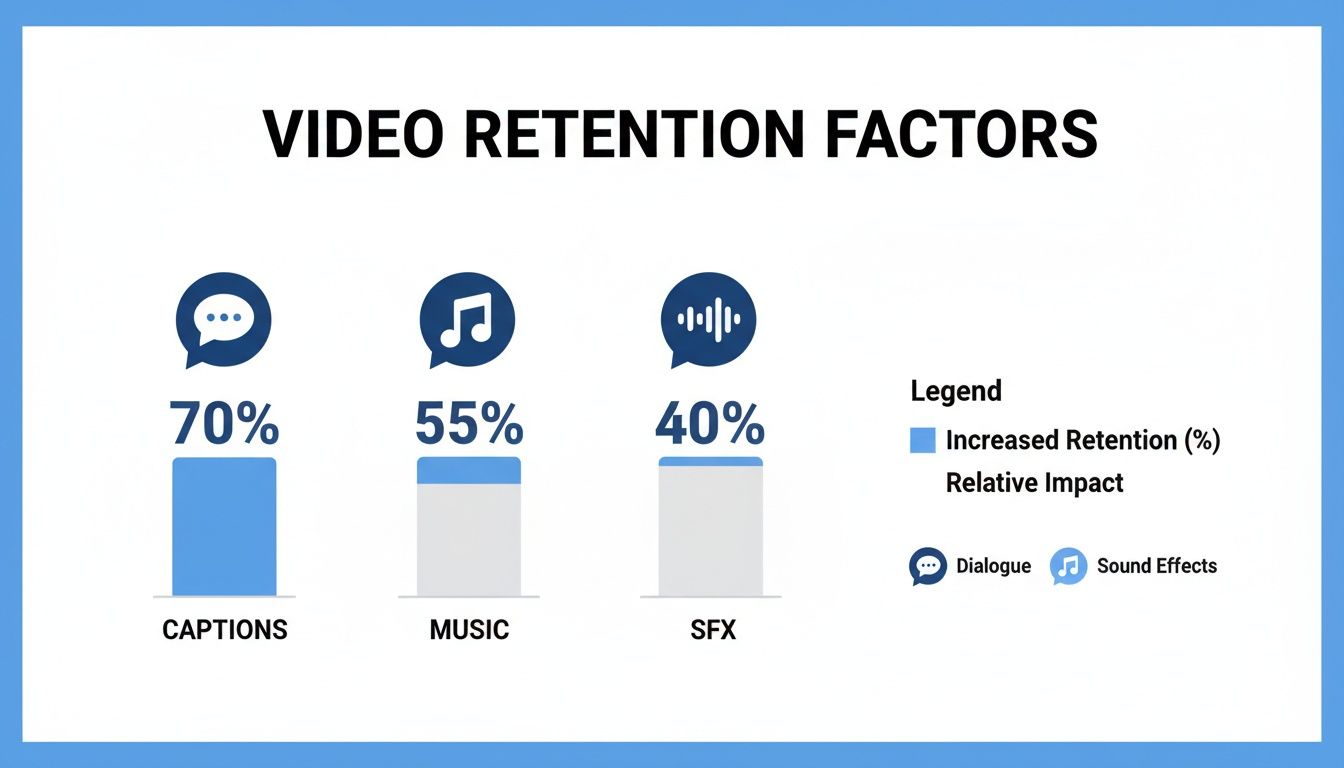
As you can see, captions are crucial for grabbing silent scrollers, but a smart mix of music and sound effects is what creates a truly immersive experience.
Platform Snapshot: TikTok vs. Reels vs. Shorts
Choosing where to focus your energy can be tough. Each platform offers unique advantages depending on your goals, whether that's immediate virality, brand building, or long-term channel growth. This table breaks down the key differences to help you decide.
| Platform Feature | TikTok | Instagram Reels | YouTube Shorts |
|---|---|---|---|
| Primary Audience | Gen Z, trend-focused | Millennials, lifestyle & e-commerce | Broad, all ages, topic-driven |
| Content Style | Raw, authentic, trend-driven | Polished, aesthetic, high-quality | Educational, entertaining, direct |
| Key Strength | Viral potential, organic reach | Community building, e-commerce | Funneling to long-form content |
| Best For | Grabbing quick, massive attention | Building a visually strong brand | Growing a sustainable YouTube channel |
Ultimately, the best strategy is often to adapt your core video for all three platforms, but always play to their individual strengths.
Since each platform has its own formatting quirks, getting the technical details right is a must. Knowing the ideal aspect ratios and where to place your text to avoid it being cut off can make or break a video's performance. For a complete technical rundown, check out our guide on https://www.clipshort.co/en/blog/social-media-video-specs to make sure every video you post is perfectly optimized.
Scaling Your Content with Smart A/B Testing
Anyone can get lucky with a viral hit, but building a sustainable content engine is how you win long-term. The real secret isn't just creating; it's creating a system for rapid learning and constant improvement. This is where the sheer speed of AI-powered video creation gives you an almost unfair advantage.
Forget spending days tweaking a single video. You can now pump out multiple variations in minutes, which opens the door for powerful A/B testing. This flips your strategy on its head—you're no longer just guessing what might work. You're systematically gathering hard data on what your audience actually wants to watch.
A Simple Framework for A/B Testing
Effective A/B testing boils down to one simple rule: isolate one variable at a time. If you change the hook, the visuals, and the background music all at once, you'll have no idea what actually made the difference. Keep it simple, focused, and methodical.
Here are the key elements I always recommend testing first:
- The Hook (First 3 Seconds): This is everything. Test two completely different opening lines. Maybe one is a question ("Did you know...?") while the other is a bold, controversial statement ("This is the biggest mistake you're making...").
- Visual Style: Create two identical videos but change the aesthetic. Render one in a gritty, cinematic style and the other in a bright, animated comic style. This quickly tells you which visual language your audience connects with.
- Call-to-Action (CTA): Your ending is just as important as your beginning. Try ending one video with "Follow for more" and a duplicate with "Comment your thoughts below." This helps you optimize for specific goals, whether that's follower growth or community engagement.
Key Metrics That Actually Matter
Once your tests are out in the wild, you have to learn to ignore the vanity metrics. The numbers that will truly shape your strategy are all about how long people stick around and what they do next.
The goal of testing isn't just to see which video gets more views. It's to understand why one version performed better, so you can replicate that success over and over again.
Zoom in on these two metrics above all else:
- Average Watch Time: This is your holy grail. It's the single most powerful indicator of an engaging video. If Version A holds viewers for 25 seconds and Version B only manages 15, you know the hook and pacing in A are fundamentally better.
- Click-Through Rate (CTR): When it comes to your CTAs, this is your proof. It measures how many people actually took the action you asked for. A higher CTR on a specific CTA tells you exactly what kind of prompt motivates your audience to act.
With TikTok now commanding 40% of the short-form market and the average user blazing through 92 videos daily, the opportunity is just massive. The platforms are rewarding retention above all else, and using A/B testing to build hyper-engaging faceless videos is the most direct path to getting their attention. You can dive deeper into these platform dynamics and see the data on TikTok's market dominance on electroiq.com.
Using automation tools like ClipShort makes this kind of consistent, high-speed experimentation not just possible, but easy. It turns your channel from a creative guessing game into a well-oiled growth machine.
Answering Your Top Questions About Short-Form Video
Jumping into AI-driven video creation is exciting, but it definitely brings up some questions. Let's walk through the most common ones I hear so you can get past the hurdles and start making videos that actually get views.
How Long Should My Videos Really Be?
There’s no magic number here. The perfect length really depends on the platform you're on and what you're trying to achieve. But if you need a solid starting point, aim for 15 to 45 seconds. That's the sweet spot—long enough to deliver real value but short enough to hold onto that fleeting viewer attention.
- TikTok: Think fast. The sweet spot is around 15-25 seconds, perfect for hooking into those quick-scrolling trends.
- Instagram Reels: You get a little more breathing room here. I find 20-45 seconds tends to perform really well.
- YouTube Shorts: Content in the 30-60 second range can be a goldmine, especially if you’re teaching something or telling a story that leads people to your longer videos.
The main takeaway? Make every second count. If your story is powerful in 15 seconds, keep it that way. Don't stretch it out and add fluff just to hit a specific time.
Can You Genuinely Monetize Faceless AI Videos?
Absolutely. Not only is it possible, but it's one of the most scalable ways to build a creator business. The best part is you're not stuck with just one way to earn.
Your monetization strategy should be as diverse as your content. Relying on just one income source is a risky game. Build multiple streams to create a more stable and resilient creator business.
Here are a few of the most effective methods I've seen work:
- YouTube Partner Program: Once you hit 1,000 subscribers and 10 million Shorts views in 90 days, you can start earning from ad revenue. It's a grind, but totally achievable.
- Affiliate Marketing: This is a massive opportunity for faceless channels. You can create videos reviewing or recommending products and drop your affiliate links in your bio or description to earn commissions on sales.
- Brand Sponsorships: As your channel grows, brands in your niche will start noticing. They'll pay you to create videos that feature their products or services.
- Selling Your Own Digital Products: Use your videos as a top-of-funnel to drive your audience to your own ebooks, templates, or online courses. You own the product, you keep the profits.
What Are the Biggest Mistakes I Should Avoid?
So many new creators stumble on the same few things. If you can sidestep these common pitfalls, you’ll be miles ahead of the competition.
- A Weak Hook: Seriously, you have less than three seconds to grab someone's attention. If your opening is flat, they're gone. Swipe. Next video.
- Bad Audio: Even with a great AI voice, if it sounds muffled, robotic, or just plain weird, it will kill your video's performance. Always listen back to your audio to make sure it’s crisp and engaging.
- Ignoring Platform Trends: What blows up on YouTube Shorts might be a total flop on TikTok. You have to pay attention to the native styles, sounds, and trends of each platform.
But the single biggest mistake? Inconsistency. Posting once a week, then disappearing for a month, makes it impossible to build any real momentum. Find a schedule you can actually stick to, and treat it like a job.
Ready to stop guessing and start creating? With ClipShort, you can turn any idea into a high-retention video in minutes. Automate your entire workflow—from script to final edit—and start growing your audience today. Explore ClipShort and create your first video for free.